

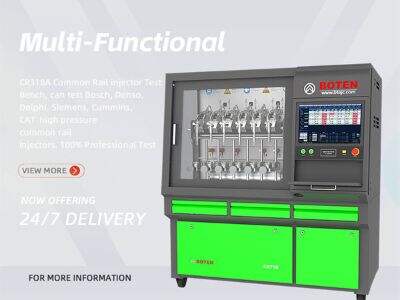
Measurement of flow in-line flow On injector test bench is relevant in ensuring that fuel injectors work in a high quality mode. Fuel injectors have a job of injecting the right quantity of fuel into an engine and failure to do so may result into poor performance or inadequacy. We build durable injector test benches at Boten which are useful in the testing of the quantity of fume that passes through each injector. This technique measures the flow accuracy such that even the mechanics and engineers are able to detect problems and rectify them prior to fitting injectors in a car. Flow measurement assists in ensuring the smooth running of engines through the proper tools and methods used by maintaining the engine power at saving money used on wasted fuel or the cost of repairing a damaged engine.
Typical Problems in injector test-rig flow measurement and how to avoid them
You would think that flow measurement using injector test bench would be simple, but when you are not keen, things can so easily turn out to be wrong. One big problem is leaks. Flow reading will go wrong in case of fuel leakage in any of the places within the system. The loose connections or the worn seals are some of the sources of the leaks. The only way out of this is by checking each of the parts and making sure that everything is attached. Another solution: air bubbles in the fuel. You may trap air and imagine that less of it is going on than there is. To prevent this, pre-measurement may be done by flushing the system or running away sufficient fuel. And changes of temperature could modify the flow of fuel. Measurement can not be very precise when the fuel is either cold or hot. To get more similar results, it is better to monitor the temperature or control it. The wrong calibration could even be present in some testing benches. Unless the sensors or the flow meters are correctly set, the numbers will not be the correct ones. At Boten we have it periodically re-calibrated anyway, in order that this may not occur. In some occasions, human error comes into play like recording the numbers too soon or the method used is inaccurate. Errors can be reduced through training the operators and explicit guidelines. To take an example, when you measure the fuel flow prematurely once you have turned on the injector, the flow may not have stabilized and hence, you would get systematically erroneous measurements. Another problem is plugged or dirty injectors. Nozzles of blocked injectors will not spray the fuel adequately hence the flow will be altered. It is extremely important that the injectors must be cleaned before the testing. The injector per se, occasionally may be the issue and presents itself as strange flow. It is important to know what normal flow can look like so that you can identify these problems fast. In simple terms, the errors can be reduced through being concerned about leaks, air and temperature, calibration as well as the skill and condition of the injector operator. These issues have been repeated many times with Boten, hence our benches are made in such a way that they do not occur and all those who use it are trained so that measurements are always made in line with expectations.
Wholesale purchasers are usually on the lookout for many fuel injectors at one time, since they need the car parts to be efficient
A good way to ensure the injectors are all working is with accurate injector test bench flow measurement. These tests measure the amount of fuel that each injector sprays in a given interval. In other words, when measured accurately, the flow tells potential buyers where the injectors may or may not be serviceable in actual engines. At Boten, we closely and precisely calculate fuel flow by means of special machines. That means every injector gets tested to make sure it sprays the correct amount of fuel, neither too much or too little. This is great for wholesale buyers as it lowers the risk of receiving defective injectors that could result in engine issues. When injectors are tested accurately consumers save money and headaches by eliminating exchanges and repairs. And they can trust that the products sold to their customers, or used in their vehicles, will function nicely. Accurate flow measurement is critical to keeping engines running smoothly and cleanly, which is key to both saving fuel and reducing pollution. This is a quick and dependable procedure thanks to Boten’s sophisticated test bench technology. For the wholesale buyer, high flow injectors must pass a most rigorous quality control process known as Gossen Metrawatt Flow Testing to ensure you are getting; and more importantly your customer is getting the best High Flow Fuel Injector available. This generates trust between the buyers and sellers, while also ensuring that the entire buying process is made as easier and safe for both parties. In short, this is why intelligent common rail injector test bench flow measurement tends to be a smart step for wholesale buyers, deliver good quality injectors help save money and get repeat customers. Boten’s tools and techniques enable this to happen every day.
Injector test bench flow measurement trends from wholesale market perspective
The How of injector test bench flow measurement is evolving, thanks to new technology and some wonderfully smart ideas. These new developments can also enable wholesale markets to provide better and faster testing results. One major trend is the rise of digital and computer-controlled test benches. The company Boten has created test stands where computer control of the flow measurement is included. This means the test is more precise and can handle a lot of injectors quickly without errors. Another trend is that sensors capable of detecting minute fuel flow changes are being employed. Such sensors can aid in finding the smallest defects that older machines might gloss over, helping ensure only quality injectors pass muster. In addition, nowadays many test benches are equipped with systems for cleaning and setting the injectors before testing. This is a time-saver and keeps the results sensitive. Speed is very important in the wholesale market, since many injectors need to be tested each day. The new UV galaxy test benches are equipped with these automation features in order to facilitate obtaining the results from the purchase more quickly. One other new concept is data analysis software that aggregates flow measurement data and prompts patterns and problems. This software may provide ideas on how to design an injector better or solve problems before they become major. It also can aid wholesale buyers in keeping track of injectors quality over time. Last but not least, environmental safety is receiving increased attention. New machines also guzzle less fuel during testing, and create less waste, good for the planet. We are pleased to be part of following these green processes in all of our test benches. These change demanders make the fuel injector test bench flow measurement smarter, faster and cleaner. Wholesalers who adopt these revenues technologies can provide their customers with improved quality injectors and service.
Common Problems during Injector Test Bench Flow measurement and their troubleshooting Guide
Sometimes when you are using a injector test bench problems can occur that result in a false or misleading flow measurement. Knowing how these problems can be identified and addressed will aide in repairing them quickly, enabling testing to run smoothly. Every body's favorite, clogged injectors can be an issue. Dirt or stale gasoline could block the injector nozzle; less gas flows during testing. A low or erratic reading can also signal that the injector needs to be cleaned. Many of the test benches are equipped with cleaning cycles, which help to free parts from dirt before testing. Then, air in the fuel line is another problem. Fluctuations or drop in the flow reading may be caused by air in the fluid. To correct this, you should ensure that all fuel lines are connected tightly and that they are filled properly so the air can be eliminated after running the system for a while. Occasionally, the sensors or gauges at a test bench will not function properly. If your flow measurement is skipping around or acting funny, take a look at your sensors for dirt or wear. This can be resolved with cleaning or replacing of the sensors. Calibration errors are also common. After a while, even the test bench’s measuring instruments will lose their accuracy. When it is regularly calibrated (with standard fluids and procedures, such as those proposed by Boten) the injector test bench is trustworthy. If their flow outcomes do not correlate back to those expectations, then recalibrate the system. Flow measurement can also be influenced by the temperature of the fuel. It is how fast the fuel flows if the fuel is too hot or too cold, then it changes as well. Throughout tests, they agree also to control the fuel at the appropriate temperature as the test benches do with in-built temperature regulator. Finally, something electrical or in the software can go wrong. These problems are usually resolved by simply rebooting the system or updating its software. For ongoing issues, support from Boten’s service team can ensure that operators receive expert assistance promptly. Test bench users can address many of these common problems and ensure that injector flow measurements are accurate and reliable by following these troubleshooting steps. This helps keep injectors in good condition and guarantees that engines are going to run right.
Table of Contents
- Typical Problems in injector test-rig flow measurement and how to avoid them
- Wholesale purchasers are usually on the lookout for many fuel injectors at one time, since they need the car parts to be efficient
- Injector test bench flow measurement trends from wholesale market perspective
- Common Problems during Injector Test Bench Flow measurement and their troubleshooting Guide